Sound as Urban Matters
Sounds are inseparable aspects of urban life. From the factory whistle announcing the beginning of the working day in early modernity to the drones of today hovering above our heads, the bulldozers on construction sites, the street musicians busking, the wheels of Airbnb guests’ luggage rolling through the neighbourhoods, and the protestors chanting in the squares, we are exposed to multiple sounds and reverberations. But what do the urban soundscapes tell us? What do sound and silence unveil about urban life? Who has the right to be loud? What should be silenced? Who possesses the privilege to speak and be heard? What kinds of spaces and spatial knowledges are produced through listening?
This thematic issue on ‘sonic intermediations in the city’ foregrounds the idea that cities are composed of and containers of sounds, but also that urban spaces are reshaped through sounds and resonances. Since the early 2000s, there has been a growing interest in sound and the urban context in practices and auditory culture, considered the ‘sonic turn’ (McEnaney, 2019). This turn has particularly been aligned with Murray Schafer’s term ‘soundscape’ (Schafer, 1993), foregrounding the sonic environment, its complexities and nuances, and thus the importance of listening to urban landscapes. Today, there is a growing interest in urban studies and geography, challenging the mere representation of space through visual and textual means, and recognising sound as a complementary form of spatial knowledge alongside the material, affective and symbolic dimensions of cities. It promotes an engagement with the sonic understanding of space and time and how individuals comprehend and engage with the world through sound. Thinking in and with sound (Jazeel and Western, 2025), the articles presented in this issue explore sounds and urban spaces from diverse points of view (and listening). The overarching questions addressed in the assembled articles are: How do different actors engage and negotiate through sonic intermediations in the city? How does sound reshape human and more-than-human relationships? How is sound spatialised and materialised through regulations and policies? And what kind of spatialities do sound and music produce?
Sound is not neutral. It carries meaning and is perceived differently by various social groups, and is surrounded by controversies and power intrusions, affecting bodies and spaces (Gallagher, 2016). It has long been a concern for public health and is associated with pollution; and, hence, is subject to regulation and control. By the end of the twentieth century, a purely quantitative understanding of noise was carried out mostly by engineers and architects (Kang, 2023) and often aimed to reduce noise by lowering the volume or the number of sound sources in crowded locations. Anti-noise campaigns represented a form of resistance against the shifting social norms linked to industrialisation and modernisation (c.f. Joanna Kusiak, 2014). While sound is inevitably part of the sensory experience of a city, it also marks an area for contestations. These controversies are manifold, ranging from neighbourhood disagreements around which sort of music is appreciated at what volume and at what time of the day/night (Biddle, 2007), to the sounds of church bells and adhans from minarets in divided cities (Aceska and Doughty, 2024), to urban governance mechanisms seeking to control and regulate the urban soundscape at scale (Oosterlynck and Swyngedouw, 2010). Sound, in other words, resonates in spatial and social relations.
At the heart of these conflicts and controversies lies the issue of how sound is perceived in relation to its significant ‘other’: noise. While this question touches upon the ontology of what sound ‘is’ and what sort of meaning and effects it may bear on our experiences as humans, it is also an everyday terrain of social and political struggle. Distinguishing sound from noise encompasses distinct cultural and social dimensions, informed by, reflecting, and defining moral taste as well as political judgements (Chandola, 2012). In the urban context, the distinction of sound from noise is part and parcel of defining, evaluating, and ordering the cultural patterns and social relationships in the city.
Noise is commonly defined as ‘sounds out of place’, in analogy with Mary Douglas’ (1966) well-known notion of dirt as ‘matter out of place’. Extrapolating on Douglas, Pickering and Rice (2017) underscore the culturally contingent procedures constructing the ‘dirtiness’ of noise as predicated on a) a set of ordered relations within a classificatory system, and b) a contravention to that order:
Noise, under this definition, is the by-product of ‘a systematic classification and ordering of sounds,’ and there is therefore no such thing as ‘absolute noise’ because no sound is noisy outside of the particular classificatory system in which it does not fit. Sounds are not noisy in themselves, but can become noise if they occur in a place where they are not supposed to be. The opposite can also be said to be true: any sound occurring in its appropriate place is, by definition, not noise. ‘Noisiness’ is not an inherent quality of sounds, but a label attached to them. (Pickering & Rice, 2017, p.8)
Sound, in other words, is more than a sensory experience: it is profoundly social and political. Nor is it neutral. Auditory experiences, and distinctions of what is ‘good’ and ‘cultural’ sound from what is ‘noise’ and ‘disturbance’ are mediated by factors such as class, gender, age, ethnicity, and lived experiences. What is labelled as ‘inappropriate’ sound often serves to reinforce racial and class hierarchies, rendering whiteness as inaudible (Stoever, 2016), while portraying working-class and racialised communities as excessively loud, uncultured, or disruptive (Fordham, 1993; Reay, 2007; Skeggs, 1997). This is, of course, nothing new. As long as humans have resided in cities, certain soundscapes have been tolerated or even promoted, while others have been dismissed as disruptively noisy. In ancient Rome, for example, coppersmiths were prohibited from working near spaces of intellectual activity to avoid auditory interference (Mopas, 2019). Similarly, modern cities have been subject to extensive legislation aimed at regulating urban sound (Radovac, 2011). While such measures are often justified as responses to noise pollution or environmental concerns (Mopas, 2019), they also function as interventions in the social and spatial organisation of the city (Llano, 2018). The ‘auditory regimes’ of urban life play a crucial role in upholding as well as shaping new forms of sociability and public order (cf. Biddle, 2019).
The perception and categorisation of urban sound, hence, is deeply intertwined with power relations, shaping and being shaped by notions of belonging and ‘otherhood’ in particular spaces (Aceska et al., 2024; Atkinson, 2007; Kulz, 2024). This, in turn, raises critical questions about authority, legitimacy, and entitlement. Who has the power to decide which sounds are acceptable, and in which contexts? Who defines what is ‘appropriate’ in one place but not in another? Who fits in and gains access to which sonic environments? Examining sound through a lens of power reveals how auditory norms are entangled with fundamental notions of publicness, and the right to the city, offering a compelling vocabulary for analysing urban environments—both metaphorically, as symbolic spaces of inclusion and exclusion, and literally, in terms of the physical soundscapes that shape everyday life.
The regulation of sound, in conclusion, is deeply intertwined with questions of citizenship and the politics of collective urban life (cf. Cardoso, 2019; Kallio, 2012; Rosenberg, 2013). Moving beyond a focus on individual rights, which often leads to ambiguities in the valuation of sound, it is crucial to recognise that the urban auditory environment is inherently shared and collectively inhabited, encompassing a series of affective interventions in urban space (Paiva, 2024). This shift necessitates a more nuanced understanding of the spatial-aural commons that are constituted through and with sound (cf. Venäläinen, 2020). In response to this need, Koldkjær Højlund et al. (2024) have introduced the concept of ‘sonic citizenship’, emphasising the reciprocal relationship between citizens and their sonic environments. Meaningful engagement, they argue, arises through citizens’ active participation in affective, embodied, and atmospheric attunement to their surroundings. Such engagement enables listeners to evaluate, mediate, interpret, resist and regulate sound, thereby challenging conventional notions of a narrowly defined political citizenship as the foundations of democratic life (Swyngedouw, 2005). The notion of sonic citizenship promotes an intersectional and situated perspective, foregrounding the importance of cohabitation and communal negotiation within shared sonic spaces.
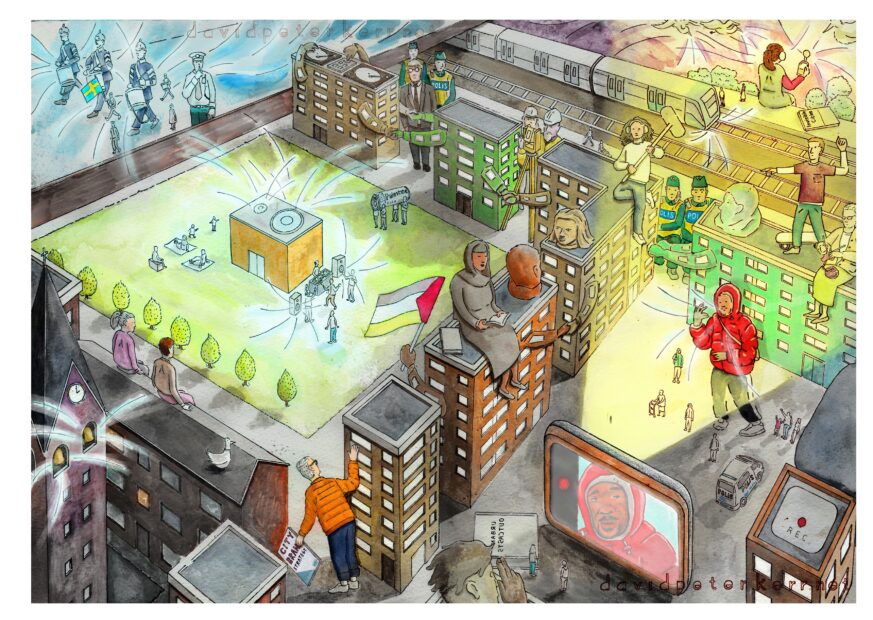
This special issue comprises four contributions, each exploring sound from distinct analytical perspectives. In Rappers as Urban Experts: Placing the Mundane into Spotlight, Hanna Tyvelä, Andrea Dankić, and Erica Åberg conduct spatial and aesthetic analyses of four music videos by different artists, examining the urban spaces and neighbourhoods depicted within them. The authors critically engage with how the lives of young, racialised men in the 2020s cultural production can be interpreted as visual/aural narratives of youth participation in urban life. Emphasising alternative modes of knowledge production, the article foregrounds the importance of listening to the needs of different resident groups and learning from their experiences. Centring marginalised voices, the article advocates for alternative knowledge production through listening and calls for a polyphonic approach to urban planning. Inaudible Cities is an audio-photo essay by Jacek Smolicki that disrupts normative spatial narratives by foregrounding the sonic textures of Stockholm’s suburbs. Through soundwalking excursions, experimental field recording, and mapping, Smolicki constructs brief sonic portraits that shift attention from the spectacular and exceptional to the infra-ordinary—the unnoticed, everyday sonic phenomena. The project challenges dominant urban imaginaries by asking what alternative stories emerge when we attune to the aurality of the peripheral and the mundane.
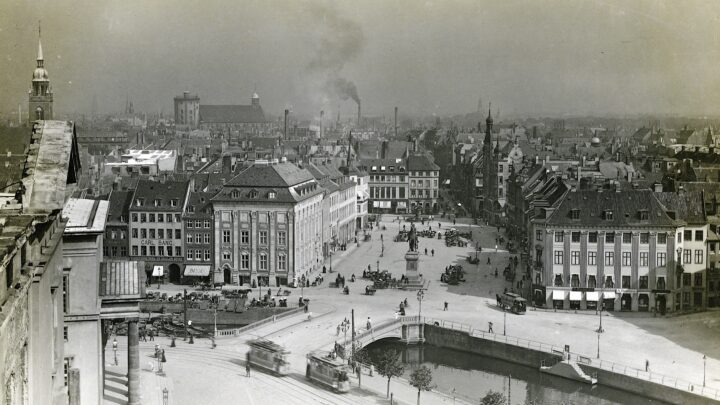
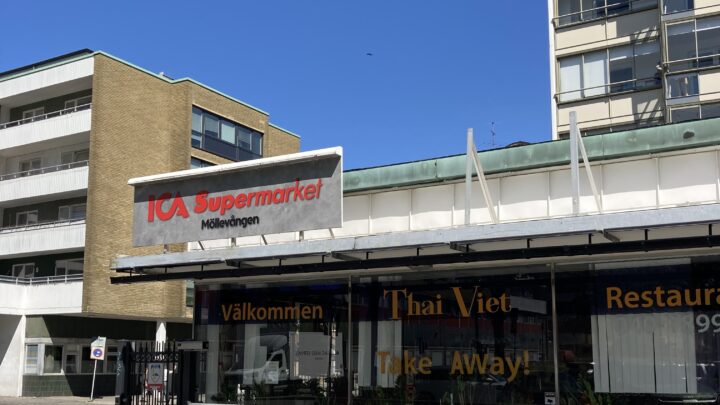
Jakob Ingemann Parby critically examines the socio-spatial transformations of 19th-century Copenhagen through an auditory framework, situating sound as central in understanding industrialisation and urbanisation. The emergence of new and intensified soundscapes during these processes not only altered the acoustic environment but also reconfigured spatial practices, reshaped the sensory experience ofeveryday life, and provoked noise complaints and controversies regarding privacy and modern life. Moving towards the postindustrial city, tensions over sound persist, as Julie Goodrich explores in Sifting Through the Noise: Navigating Expectations for Local Music in the Kulturljudzon. While music and other sonic cultural practices are often celebrated in ‘creative city’ discourses, the economic focus on marketable soundscapes can marginalise grassroots and DIY scenes. Goodrich examines Malmö’s cultural landscape, showing how the right to be loud is unevenly distributed, favouring commercially viable actors. Her analysis of the Kulturljudzon planning initiative highlights the challenges faced by self-organised groups, arguing for stronger municipal support to sustain diverse urban cultural expressions.
In this issue, we hence engage with the politics of sound and space. The volume illustrates that, in most cases, it is not the sound or noise itself that is deemed in/appropriate but what it is taken to represent and symbolise in a broader framework of power relations, positionality, and quests for social agency. We further invite our readers to reconsider silence, not as a mere absence of sound, but as a sonic presence that demands a distinct mode of listening. Silence, in this context, becomes an active auditory experience, one that reveals underlying structures of inclusion, exclusion, and resistance. Stay attuned! And listen!
References
Aceska, A., Doughty, K., 2024. The sounds of who we are: rethinking divided cities through sound. Urban Geography. https://doi.org/10.1080/02723638.2024.2309107
Aceska, A., Doughty, K., Tiryaki, M., Robinson, K., Tisnikar, E., Xu, F., 2024. Doing sonic urban ethnography: Voices from Shanghai, Berlin and London. Urban Studies. https://doi.org/10.1177/00420980231223866
Atkinson, R., 2007. Ecology of Sound: The Sonic Order of Urban Space. Urban Studies 44. https://doi.org/10.1080/00420980701471901
Fordham, S., 1993. “Those Loud Black Girls”: (Black) Women, Silence, and Gender “Passing” in the Academy. Anthropology & Education Quarterly 24, 3–32.
Gallagher, M., 2016. Sound as affect: Difference, power and spatiality. Emotion, Space and Society 20, 42–48. https://doi.org/10.1016/j.emospa.2016.02.004
Jazeel, T., Western, T., 2025. Sound Carries: Techniques for Hearing Space and Politics. Social Text 43, 1–22. https://doi.org/10.1215/01642472-11573328
Kang, J., 2023. Soundscape in city and built environment: current developments and design potentials. City Built Enviro 1, 1. https://doi.org/10.1007/s44213-022-00005-6
Kulz, C., 2024. ‘I leave the everyday behind, everyday’: Sounds and spaces of the revanchist middle classes in Berlin’s Fünf Morgen Dahlem Urban village. Urban Studies. https://doi.org/10.1177/00420980241249061
McEnaney, T., 2019. The Sonic Turn. Diacritics 47, 80–109. https://doi.org/10.1353/dia.2019.0035
Oosterlynck, S., Swyngedouw, E., 2010. Noise Reduction: The Postpolitical Quandary of Night Flights at Brussels Airport. Environment and Planning A – ENVIRON PLAN A 42, 1577–1594. https://doi.org/10.1068/a42269
Paiva, D., 2024. Affective Urbanism. Springer Nature.
Reay, D., 2007. ’Unruly Places’ : Inner-city Comprehensives, Middle-class Imaginaries and Working-class Children. Urban Studies 44, 1191–1201. https://doi.org/10.1080/00420980701302965
Schafer, R.M., 1993. The Soundscape: Our Sonic Environment and the Tuning of the World. Simon and Schuster.
Skeggs, B., 1997. Formations of Class & Gender : Becoming Respectable 1–200.
Stoever, J.L., 2016. The Sonic Color Line: Race and the Cultural Politics of Listening. NYU Press. https://doi.org/10.2307/j.ctt1bj4s55