Waste and Power: Critical Perspectives on Inequality and Exclusion
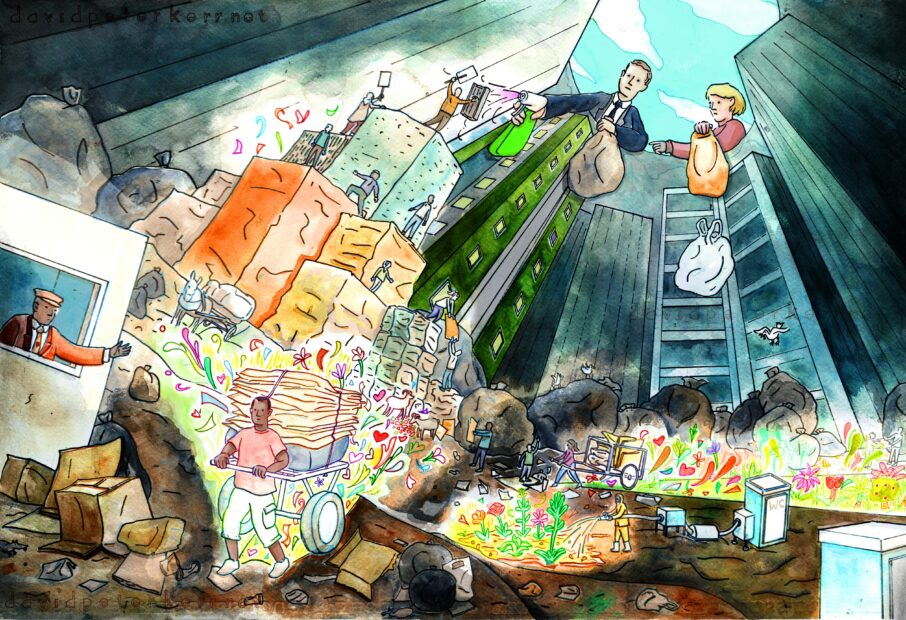
When I tell people I study waste, almost everyone’s response is to tell me about their own experiences, and often frustrations, with litter. Waste provokes affective reactions (Hawkins, 2006). Still, it is not only something we have a personal relationship to – waste also connects us on a global scale through waste flows, relationships of privilege and exploitation, and the global threat of climate collapse. Waste is standing in front of your bins at home, wondering where to put the juice carton. Waste is shiny fast fashion in the Global North, and polluted beaches in the Global South. Handling waste can be a virtue or a sin. Waste is a relationship that binds us all together, every day.
This issue of Urban Matters explores the intersections between waste and power relations. The articles investigate different aspects and consequences of people’s interactions with waste and waste systems. The field of waste studies is by necessity broad. Studies range from measuring the performance of waste management schemes to theoretical explorations of what it means to discard things and people. In our times of climate collapse, we need broad scholarship that can investigate efficient schemes of dealing with waste. At the same time, we need research that aims to understand how waste intersects with relationships of power. This latter part of the field is wide-ranging, and the articles in the issue explore some of the many dimensions of waste and power.
Over the years, different concepts have been proposed to understand our current relationships and challenges with waste. Scholars have theorized waste as being broader than a material reality. For example, Michael Thompson’s (1979) classic work on "rubbish theory" argues that rubbish can re-acquire value after becoming valueless. By emphasizing the fluidity of value and the movement of objects between categories, rubbish theory shows that value is not fixed but can be reclassified through cultural processes. "Discard studies" (Liboiron & Lepawsky, 2022) goes beyond material waste and instead looks at broader systems of waste and wasting. Marco Armiero (2021) proposes the concept of the "Wasteocene", a term that highlights how waste is a defining feature of our epoch – not only the material reality of waste, but especially the “wasting relationships, those really planetary in their scope, which produce wasted people and places” (p. 2). What these examples show is that waste is relational, and that the relationships it constitutes are global.
Waste and pollution have long been implicated in the production and maintenance of social boundaries and inequalities. Historically, in the Global North, urban spaces and the poor communities that inhabit them have been associated with a dangerous kind of dirtiness. This has not only been a hygienic concern about the spread of disease, but also a moral concern about what societies should look like and how people should live (Blanc, 2019). There also exists a long-standing stigma about migrant communities not contributing to sustainability in the Global North, often invisibilizing sustainability practices which do not conform to Western ideas of sustainability (Bradley, 2009; MacGregor et al., 2019). Joshua Reno and Britt Halvorson (2022) argue that, even though it is not always visible, all waste scholarship is constituted by concerns of race. They write that since scholarship has shown that BIPOC communities are disproportionately affected by the negative consequences of waste, it can be argued that waste strategically creates suffering to maintain unpolluted white spaces. Taken together, these perspectives suggest that waste is not merely a material or environmental concern, but also a site through which social, moral, and racial hierarchies are produced and maintained.
Much waste scholarship is indebted to Mary Douglas’s theorization of dirt in Purity and Danger (1966/2001). Famously, Douglas defines dirt as "matter out of place", arguing that concerns with dirt cannot be reduced to ideas about hygiene and disease. Rather, dirt threatens order. Dirt can be considered that which is left over after ordering the elements and systems of society. Max Liboiron (2022) warns waste scholars not to uncritically conflate the concepts waste and dirt, since waste is often not out of place (i.e., it is clear in which place it should be). Liboiron reminds us that Douglas’s Purity and Danger is concerned with power, though:
Genuine threats to power must be eradicated, not sorted out and neatly laid in blue bins at the front door. Sorting something spatially, the literal meaning of “out of place”, is quite different than upsetting power balances. … A theory of power in waste studies must distinguish between the stakes and politics of sorting (trash in the bin) versus eradication of threats (killing, aggressive assimilation). (33-34)
Rather than reducing waste to questions of spatial order, these perspectives underscore the need to understand waste through the politics of classification and the unequal relations of power that such classifications sustain.
Another relevant dimension of waste and power relationships is the symbolic dimension of waste. In my own research (Roelofs, forthcoming), I have studied how housing companies in Sweden attempt to manage waste and litter in marginalized urban areas. Even though visible waste and litter are limited in these places, compared to other contexts they were seen as dirty and housing companies were motivated to find solutions to what they saw as particular problems of marginalized urban areas: litter in streets, poorly sorted recyclables, and littering around recycling bins. The fact that this type of litter was viewed as particularly problematic shows that waste and litter can acquire different meanings in different settings. In the case of marginalized areas in Sweden, often built during the post-war period, associations between poverty, migrants, and the handling of waste (Bradley, 2009; MacGregor et al., 2019) seemed to reinforce the perceived problem of littered environments symbolically.
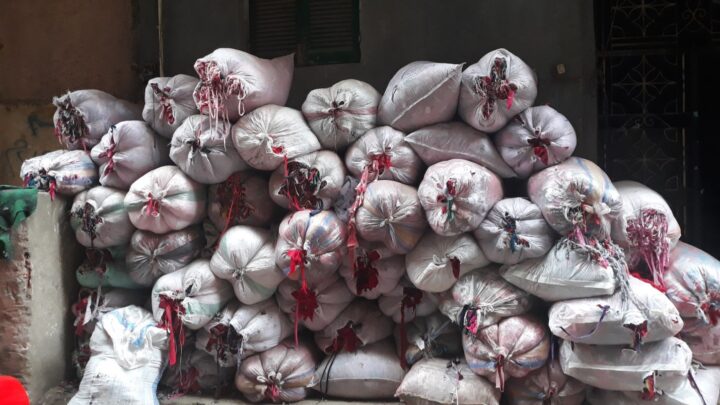
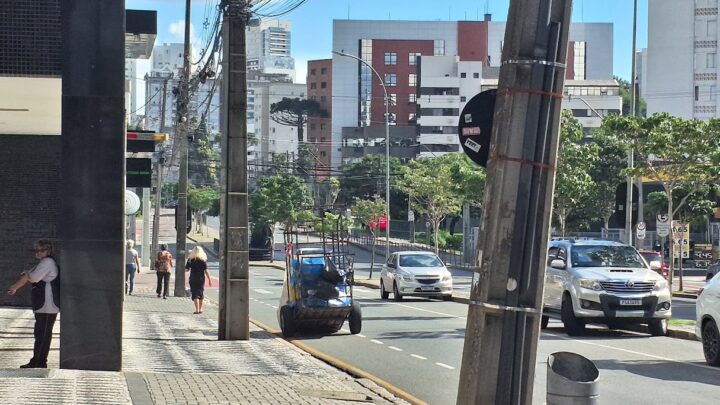
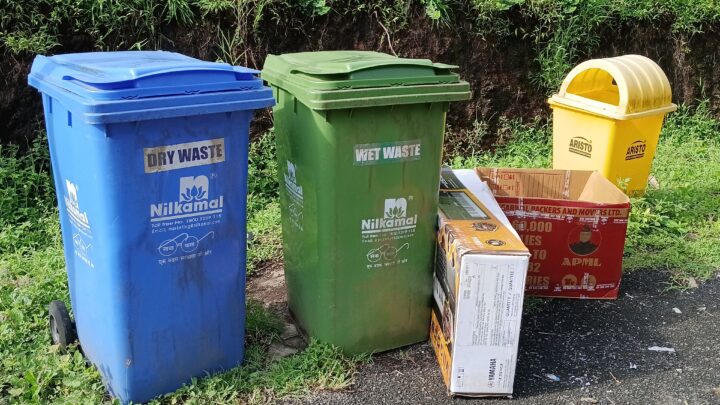
The contributions to this issue of Urban Matters capture several dimensions of the relationships between waste and power. Júlia Silveira and Gabriel Barth da Silva study the case of waste pickers in Brazil, challenging essentialist categories of reproductive work. They demonstrate how the figure of the catadores de lixo or carrinheiros can be understood as performing care work with the city as an object of care, reconceptualizing these stigmatized groups of poor, black men, and showing the impossibility of an essentialist definition of reproductive work. Sarah Eldefrawi explores waste practices in France and Egypt through the lens of stigma power, revealing how authorities’ interpretations of local practices legitimize control over urban spaces. Airin Farahmand focuses on the production of the invisibility of waste, particularly plastic waste. She draws on Bennett’s theory of enchantment and vibrant materiality to propose an aesthetic methodology for reengaging with waste, which she illustrates with three vignettes based on her beach-cleaning experience in the Netherlands. Linus Ekman Burgman turns his attention to the Swedish sewage sludge debate and examines how sewage sludge challenges the modernist order of separation between human beings and their excrement. Mohan Kumar Bera, Ritik Dwivedi, Lakshya Arora, Eshaan Gupta, and Mokaloba Mokaloba study the efficiency and effects of waste management in the Indian state of Goa, revealing that households are increasingly aware of the need for waste segregation while also identifying structural barriers to implementation, especially for marginalized groups.
Works Cited
Armiero, M. (2021). Wasteocene: Stories from the Global Dump. Cambridge University Press. https://doi.org/10.1017/9781108920322
Blanc, N. (2019). Urban nature: (The) good and (the) bad. In F. Bretelle-Establet, M. Gaille, & M. Katouzian-Safadi (Eds), Making sense of health, disease, and the environment in cross-cultural history: The Arabic-Islamic world, China, Europe, and North America (pp. 287–308). Springer.
Bradley, K. (2009). Planning for eco-friendly living in diverse societies. Local Environment, 14(4), 347–363. https://doi.org/10.1080/13549830902764738
Douglas, M. (2001). Purity and danger: An analysis of concept of pollution and taboo. Routledge. (Original work published 1966)
Hawkins, G. (2006). The ethics of waste: How we relate to rubbish. Rowman & Littlefield.
Liboiron, M. (2022). Matter out of place. In Z. Gille & J. Lepawsky (Eds), The Routledge handbook of waste studies (pp. 31–40). Routledge.
Liboiron, M., & Lepawsky, J. (2022). Discard studies: Wasting, systems, and power. The MIT Press.
MacGregor, S., Walker, C., & Katz-Gerro, T. (2019). ‘It’s what I’ve always done’: Continuity and change in the household sustainability practices of Somali immigrants in the UK. Geoforum, 107, 143–153. 10.1016/j.geoforum.2019.09.013
Reno, J. O., & Halvorson, B. (2022). Waste and whiteness. In Z. Gille & J. Lepawsky (Eds), The Routledge handbook of waste studies (pp. 40–54). Routledge.
Roelofs, K. (forthcoming). Waste management initiatives in stigmatised urban areas: Risks for further stigmatisation and ways forward. In A. Guaran & F. Venturini (Eds.), Rethinking waste in Europe: From management to prevention for just and sustainable futures. Springer.
Thompson, M. (1979). Rubbish theory: The creation and destruction of value. Oxford University Press.