Rappers as Urban Experts: Placing the Mundane into the Spotlight
In Nordic cities, parallel developments are taking place, with segregation and neoliberal urban development as phenomena that are intensified by political decisions. Diverse participatory planning approaches have been used to find solutions to growing urban inequality. However, inclusion processes do not reach a wide range of residents (Häikiö, 2010; Leino & Puumala, 2021; Sjöblom & Niitamo, 2020). Furthermore, neoliberalist city planning objectives have had a significant influence on urban planning in recent decades in Nordic cities. In practice, this has meant top-down planning, with business objectives influencing the direction of urban development. The ambition of large commercial projects to drive urban development has been seen as a sign of vibrant cities, with no real alternatives (Davoudi et al., 2021; Pries, 2020).
In contrast, there have been increasing efforts to develop theories on bottom-up planning that challenge previous understandings of participatory processes. Different ways of addressing the needs and aspirations of diverse residents are being developed to counteract unequal development (Hewidy, 2024). In this study, we explore the possibilities of reaching young adults’ own narratives about their local environments by focusing on rap music videos from Finland and Sweden.
The study draws from participatory methods that shift the power from planners and policymakers to residents by breaking down the familiar constellation of expertise and power. Thus, planning is based on the experiences of residents, which an effective planning process will have to take into account (Hewidy, 2022; Hewidy, 2024; Wallin, 2019;). More specifically, this change is about a shift to approach urban planning through local narratives. Thus, the development of participatory processes focuses on listening to the needs of different resident groups and learning from their experiences (Ameel et al., 2023; McFarlane, 2011; Tyvelä & Åberg, 2023; Åberg & Tyvelä, 2024).
In this article, we focus on four music videos that provide us with perspectives of artists’ local neighbourhoods: Dizzy from Rågsved, Stockholm with K.O.D. (2021), Guleed from Möllevången, Malmö with El Barrio (2024), Blacflaco from Pikku Huopalahti/Lillhoplax, Helsinki with West Side Baby (2021) and Ege Zulu from Herttoniemi/Hertonäs, Helsinki with Swengari pt 4 (Ollaan tyhmiä) (2021). With their recognisable urban environments from Malmö, Stockholm and Helsinki, these four videos provide examples of the urban spatial aspects imbedded in the imagery of rap and hip-hop music storytelling.
We have identified the locations of the videos and applied digital mapping to them. We see this as a form of alternative knowledge production: seeing places through music videos and visiting the placesin situ after learning to recognise them from the videos. In this way, we also draw from human geography and urban exploration approaches that emphasise experimental aspects and spatial data as key components of knowledge production (Bennet, 2011; Norton & Mercier, 2016). This study is based on the desire to find out how young peoples’ own cultural production, in this case rap music and music videos, can be read as visual narratives of youth urban participation. This knowledge could contribute to more polyphonic urban planning. To more thoroughly understand the narratives created in rap videos, we used visual analysis that takes into account the structural aspects affecting interpretations of the city (Kautt, 2019). An example of this is acknowledging that in contrast to Sweden, where the socioeconomic division between city districts is more clearly defined, Helsinki has long implemented a mixed housing policy. As a result, the Helsinki areas featured in this article, Herttoniemi and Pikku Huopalahti, are not stigmatised neighbourhoods per se. Instead, socioeconomic differences tend to manifest at the level of individual apartment buildings or even apartments (Vaattovaara & Kortteinen, 2012; Van Ham et al., 2021). Consequently, Finnish rap videos often highlight locations tied to the genre’s general aesthetic or to the recognisability of a place (Åberg & Westinen, 2025). In line with hip-hop scholarship that focuses on Nordic countries, we look at how the examples express belonging and non-belonging to the local environment and society (Cvetanović et al., 2024; Dankić, 2019; Dankić & Åberg, forthcoming; Lindholm, 2016; Sernhede, 2002; Westinen, 2023; see also Dodds, 2024). The aim is to produce a comparative study of Finnish and Swedish urban narratives that could possibly be seen as an approach for more inclusive city planning. The study aims to show the Nordic societies and urban environments from the perspective of young, racialised men in the 2020s, told through the framing of rap music, which carries its own aesthetic ideals.
RAP, PLACE AND AESTHETIC CONVENTIONS
Place has been central to the understanding of hip-hop from the very beginning (Forman, 2002). Cheryl L. Keyes (2002, p. 230) argues that “scholars must seriously examine the cultural milieu – the streets – from which music evolves”. Within the popular culture creation myth, the 1970s New York City borough of the Bronx is understood as the birthplace of hip-hop culture. According to the creation myth, the dance, music, and graffiti expressions of hip-hop were used by the youth to make their voices heard and to be seen in a metropolitan environment and a society that were strongly characterised by segregation, based on categories such as ethnicity, racialisation, class, gender, and age. Moreover, it was fun to engage with these different hip-hop practices (Chang, 2005).
“Repping” (short for representing) one’s local hometown or even the neighbourhood by mentioning its name or postal code is a common aesthetic practice in rap music. It can be interpreted as a way of speaking of the context in which the narrator is rooted – “I speak through the perspective of this particular place which has shaped me and is therefore a part of me”. Since the places exemplified in rap music are often stigmatised and negatively portrayed in public media discourse, the act of saying the name or postal code becomes a way of pointing out the connection to a place that is rarely portrayed as an obvious hometown or neighbourhood where one is born and raised. It becomes an explicit way of telling others where one comes from. This can be interpreted as a way of reclaiming the power of the meaning attributed to the place, to fill the place with meaning as an inhabitant of the neighbourhood, independent of the surrounding community’s perceptions.
Mainstream and stereotypical representations of masculine hip-hop Blackness are another aspect of aesthetics in certain rap music, especially when also associated with stigmatised (g)local places. The Black masculine identity associated with hip-hop is often described in terms of a hyper-aggressive and hyper-masculine persona (Perry, 2004; Quinn, 2005; Rose, 2008). These often exaggerated representations are often portrayed by the rappers themselves and can be used to create credibility (Dankić, forthcoming).
Rap music must be understood as a glocal music genre that is always both locally and globally rooted (Condry, 2009). As a result, some researchers are talking about different hip-hop cultures rooted in different places around the world, all of which are grouped together under the name of a global hip-hop nation. In the case of Nordic rap music, the glocal is expressed by understanding the music as rooted in its own neighbourhood and region, but also in Europe and the world. This is explained by rap music’s inherent notion of the global that is found in the American creation myth. Within the understanding of rap music as a glocal phenomenon, some types of rap music are understood as a global socially conscious and socially critical language that is used by musicians to speak about the topics that engage and affect themselves and their listeners.
The broader hip-hop discourses introduced above can be situated within local youth contexts by analysing how young people actively construct and communicate place-based identities through their own representations of their neighbourhoods.
READING THE VISUAL NARRATIVES OF THE MUSIC VIDEOS
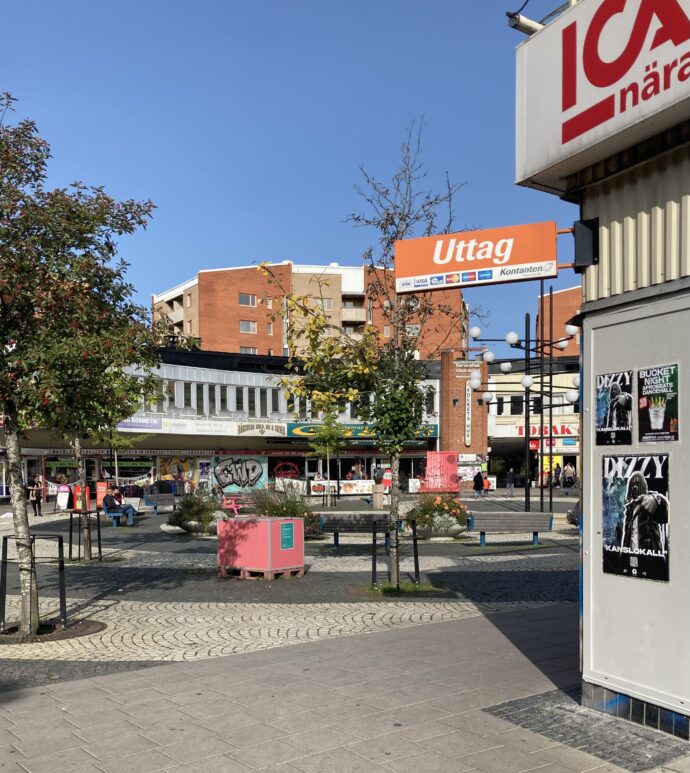
We start from Stockholm with Dizzy’s music video, which begins with a scene where the 1950s suburb Rågsved is filmed from the air on a bright summer night. The image shifts to the ground, where Dizzy rides a black horse into the horseshoe shaped suburban mall of Rågsved. The setting could be described as magical realism, where everyday urban realities are combined with mythical or surreal imagery. This is underlined in Dizzy’s dominance in the scene, as he is the self-proclaimed ‘king of drill’, an acronym for the song title K.O.D. He as the majestic horseman is surrounded by a group of young men wearing t-shirts with the names of their friends in prison printed on them. Later in the video, Dizzy is filmed on the roof of Rågsved centre and on the roof of an old white Volvo lifted into the air at a garage, highlighting his position as a leader. The video also shows a shiny Audi speeding through a road tunnel. Dizzy is reaching out of the back of the car, seemingly oblivious to safety, let alone traffic rules. True to the rap aesthetics of stereotypical representations of masculine hip-hop Blackness, Dizzy raps about the hectic nature of drug dealing, trap phones, and the lifestyle that comes with this illegal trade. The swift cuts and fast-paced scenes in the video emphasise the message of the song: Dizzy is Rågsved’s leading figure, with his own rules in the urban space.
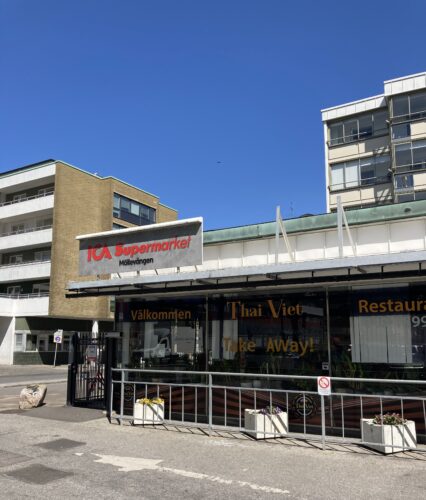
In El Barrio, Guleed and Spanish rapper Morad perform in a crowd scene in the parking lot of Malmö’s Möllevången district at night, surrounded by local boys and young men. The food chain ICA Möllevången and the local bodega Mini Livs occasionally flash recognisably in the background. Guleed is filmed sitting on a chair in the street in the middle of a crowd. Morad can be seen in this setting as a guest who has been offered a place of honour by Guleed, the leader of Möllevången. Both have a small child in their arms wearing prestigious Moncler vests. The video is dramatised by the lights of police cars and the emergency flares, reinforcing the sense of conflict in the urban space. In the song, which moves at a melancholic pace, Morad raps about the position of men like him in a society where crime is seen as something that they are even encouraged to engage in by that society. Guleed’s message is that despite society’s criminalisation of them, they are the true leaders of the streets of Malmö. A big Palestinian flag is waved in the background while Guleed and Morad point out that their political message extends beyond Möllevången. The song is subtitled in English, aimed at both Spanish and Swedish audiences, but maybe also at the rest of the world.
Both Dizzy’s and Guleed’s music videos seem to emphasise their role as part of a youth community hanging out on the street, which underlines the importance and the contradictory image of this social activity specific to young urban people (Lieberg, 1995). Thematically, both videos can be seen as a carnivalisation of hanging out in groups in public spaces. In hip-hop, carnivalisation is particularly visible in the exaggerated personas, inversion of hierarchies, and profane imagery found in the video discussed, functioning as a form of social critique (Zhang, 2023).
Movement and drama are created through various effects, rides, emergency flares, and quick cuts, which in turn highlight urban agency and the status of the young men in their community as well as their dominance over some parts of the city.
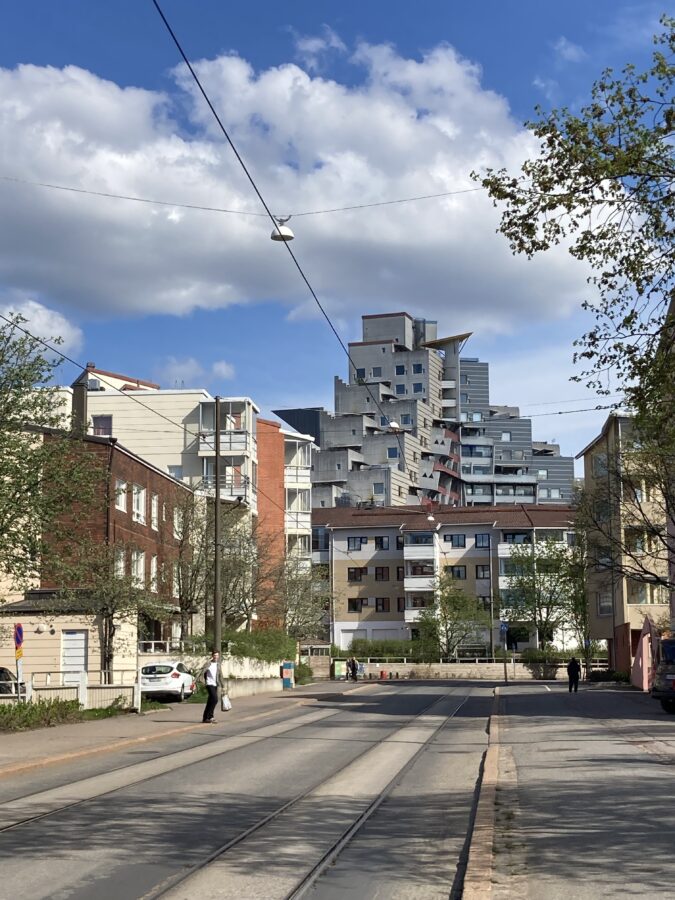
With Blacflaco, our analysis moves to Finland and to the western part of Helsinki, Pikku Huopalahti. The West Side Baby music video, a breakthrough collaboration between the teenage self-published rapper Blacflaco and older mainstream rappers Ibe and Elastinen, explores West Helsinki identity, with each artist describing their youth in western Helsinki. The song’s title comes from a verse by Blacflaco in which he describes himself as a “west side baby”. Blacflaco’s contribution takes place in the postmodernist, pastel-coloured Pikku Huopalahti of the 1990s, a housing project known for its mix of public housing and owner-occupied housing. While the built environment of Blacflaco’s home district is aesthetically and socially a far cry from the raw suburban landscapes of the European rap aesthetic, the rest of the imagery follows the language of rap.
Like Dizzy and Guleed, Blacflaco hangs out in the street in a group. Blacflaco and his friends are dressed in black sweatsuits with his ‘brand’ Ghetto Baby printed on them, referring perhaps more to the ghetto narratives in rap than explicitly to the ghettoism of the surrounding inner-city neighbourhood. The urban rap aesthetics are also familiar with local, small private-owned bodegas, in front of which Blacflaco raps about his identity as a young Somali and how he must cope with prejudice on the street and in society at large. Compared to their Swedish counterparts, the video has lower-budget production, even though it features big rap artists, but like Dizzy’s Rågsved aerial shot, West Side Baby features an impressive aerial view of the pyramid-shaped 15-story terrace house that is a well-known landmark of Western Helsinki.
Our last example focuses on the visual narrative of DIY production by East Helsinki-based rapper Ege Zulu. Swengari pt 4 (Ollaan tyhmiä) deals with the position of young people like Ege Zulu in society and on the street. He describes how they are seen as stupid and how it is difficult to break away from that prejudice. In the opening scene of the DIY production music video, Ege Zulu is dressed up as a student in a beige wool coat, with round glasses and a continental philosophy magazine Manner in his hand. He raps for the camera in front of a school building, presenting the magazine in his hand.
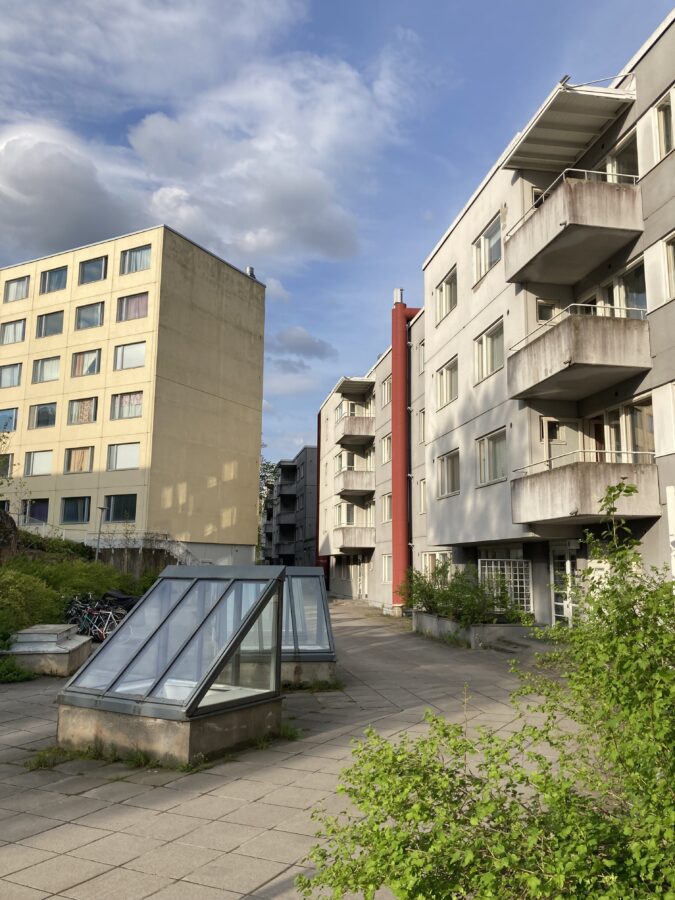
From his role as a student, Ege Zulu returns to his own self, in a sporty outfit, moving around Herttoniemi. Like Pikku Huopalahti, the district of Western Herttoniemi is a residential area combining public and private housing, built in the 1990s and early 2000s. In the end of the video, Ege Zulu dances with friends in the courtyard that connects the light-coloured apartment buildings and is joined by an older white man. The spontaneous plot seems to amuse the young and older men dancing together, and the overall vibe of the scene is positive, even funny. The upbeat tempo and the energetic dance counterpoint the tragic message of the song, with a chorus of male voices repeating “we are so stupid”.
These examples illustrate how the narrative tradition and aesthetics of rap provide the possibility for young racialised men to challenge the dominant society more radically than other cultural forms because it is self-produced, self-distributed, and most often truly understood only within its own cultural context and target audience.
RAP NARRATIVES AS COMMUNITY KNOWLEDGE
Set in very local settings and following the aesthetics of rap, the artists presented in this study challenge the notion of agency in Nordic societies and define themselves out of “Finnishness” and “Swedishness”, identifying themselves and their neighbourhoods as simultaneously more globally and more locally rooted than the dominant imaginaries of their respective cities (c.f. Listerborn, 2013).
In the image of artists and in the narrative of music videos, which is of course most often based on the visions of a wider production team, the mundane urban places such as suburban shopping malls, roadsides, bodegas, parking lots, and other everyday urban environments form meaningful frameworks for young peoples’ lives. Their glocal significance is even sometimes underlined by the magical realism of the visual narratives that combine the everyday with the spectacular. As Zhang notes, the exaggerated personas in rap and the inverted social hierarchies – key features of carnivalisation – when combined with the ordinary, create a compelling tension in which artists merge recognisably local and global narrratives. (Zhang,2023).
Rap’s narrative can thus be interpreted as placemaking, identifying the meanings of places and attempting to articulate them to a wider audience (Aravot, 2002). To continue Aravot’s argument of what these places need is not top-down placemaking, but rather a top-down capacity to recognise and support the significance of youth-driven narratives.
From these examples, it seems that a certain provocation is one of the common themes in Nordic rap videos and urban environments are narrated through conflicts of belonging. The complexity of the artists’ images, hip hop aesthetics, and international influences is important to consider when reading rap narratives as examples of community knowledge. Expensive cars, flashy jewellery, and designer clothes are presented as symbols of hope. It seems that wealth is often seen as the only solution to escape urban exclusion. Other alternatives to social and urban exclusion are less likely to emerge in these narratives. There are no clear depictions of what they would like it to be, but the message in the lines and in between them is that they see themselves unfairly viewed as threats by the (majority) society . The artists are pointing out the problems, but tackling them remains the responsibility of the society and policies that created them.
Many studies on participation theory have shown that the narratives of urban exclusion and the absence of young peoples’ voices in decisionmaking are increasingly present in the Nordic societies. The diversity of the residents is not reflected in the decisionmaking on the development of urban space. As Hewidy has argued, when applying planning theories in practice, planners have the power to influence the unequal development of society in terms of whose needs are heard (Hewidy, 2022; Hewidy, 2024).
The examples we have given of rap music and new planning approaches suggest that there is still much to do to develop effective participatory methods. Rap music and its visual narratives are evidence of, first, its cultural and societal significance and, second, that the voices of racialised youth are not being heard in urban inclusion.
Two questions for future theoretical development emerge when examining planning theories and practices in the context of these rap narratives: 1. Whose experiences are excluded from participatory processes? and 2. How could bottom-up planning theories incorporate a deeper understanding of diverse residents’ voices? We therefore propose that youth-inclusive methods should be compiled and implemented comprehensively. Young people are the future of cities – do we know what they want from their urban environments?
References
Ameel, L., Gurr J.M., & Buchenau B. (2023). Narrative in Urban Planning: A Practical Field Guide. Transcript Verlag.
Aravot, I. (2002). Back to Phenomenological Placemaking. Journal of Urban Design, 7(2), 201–212. https://doi.org/10.1080/1357480022000012230
Bennett, L. (2011). Bunkerology—A Case Study in the Theory and Practice of Urban Exploration. Environment and Planning. D, Society & Space, 29(3), 421–434. https://doi.org/10.1068/d13410
Chang, J. (2005). Can’t Stop Won’t Stop: A History of the Hip-Hop Generation. London: Ebury Press.
Condry, I. (2009). Hip-Hop Japan: Rap and the Paths of Cultural Globalization. Durham: Duke University Press.
Cvetanović, D., Rantakallio, I., Westinen, E., & Klette-Bøhler, K. (2024). Politics of Race, Belonging and Community in Yeboyah’s music video ‘Elovena.’ Journal of Extreme Anthropology, 7(1), 188–211. https://doi.org/10.5617/jea.11838
Dankić, A. (2019). Att göra hiphop: en studie i musikpraktiker och sociala positioner. Diss. Stockholm: Stockholms universitet (Stockholm University).
Dankić, A. (Forthcoming 2025). Navigating Stereotypes, Becoming Credible. Skills, Gender, Race and Nation Among Swedish Hip-Hop Practitioners. In: Lindholm, S. & Ringsager, K., Nordic Noise. Hip Hop, Culture and Community in Northern Europe. London: Routledge, Ashgate Popular and Folk Music Series.
Dankić, A. & Åberg, E. (Forthcoming 2025). ‘Far away from home’ while ‘Live and direct from Nordvästra’. Expressions of (Non)Belonging in Swedish Gangsterrap. IASPM Journal.
Davoudi, S., Kallio, K. P., & Häkli, J. (2021). Performing a neoliberal city-regional imaginary: the case of Tampere tramway project. Space and Polity, 25(1), 112–131. https://doi.org/10.1080/13562576.2021.1885373
Dodds, P. (2024). Bråkmakargatan in Rosengård: On the intermedial politics and poetics of Swedish suburban rap. Urban Matters, https://urbanmattersjournal.com/brakmakargatan-in-rosengardon-the-intermedial-politics-and-poetics-of-swedish-suburban-rap/ .
Forman, M. (2002). The Hood Comes First: Race, Space, and Place in Rap and Hip-Hop. Middletown, Conn.: Wesleyan University Press.
Hewidy, H. (2022). The hidden city of immigrants in Helsinki’s urban leftovers – The homogenization of the city and the lost diversity. Diss. Espoo: Aalto University.
Hewidy, H. (2024). Planners as Gatekeepers: Spatial Justice Through the Lens of Planning Theory in Helsinki. IOP Conference Series: Earth and Environmental Science, 1396, Article 012029. https://doi.org/10.1088/1755-1315/1396/1/012029
Häikio, L. (2010). The Diversity of Citizenship and Democracy in Local Public Management Reform. Public Management Review, 12(3), 363–384. https://doi.org/10.1080/14719030903286649
Kautt, Y. (2019). Practice and Structure as Concepts of a Sociology of Visual Communication: Toward a Methodology of Visual and Structural Analysis. Qualitative Inquiry, 25(4), 350-362. https://doi-org.ezproxy.utu.fi/10.1177/1077800418792022
Keyes, C. L. (2002). Rap Music and Street Consciousness. Urbana: University of Illinois Press.
Leino, H., & Puumala, E. (2021). What can co-creation do for the citizens? Applying co-creation for the promotion of participation in cities. Environment and Planning C, Politics and Space, 39(4), 781–799. https://doi.org/10.1177/2399654420957337
Lindholm S. (2016). Remembering Chile: An Entangled History of Hip-hop In-between Sweden and Chile. Diss. Malmö högskola (Malmö University).
Lieberg, M. (1995). Teenagers and Public Space. Communication Research, 22(6), 720–744. https://doi.org/10.1177/009365095022006008
Listerborn, C. (2013) Suburban Women and the ‘Glocalisation’ of the Everyday Lives: Gender and Glocalities in Underprivileged Areas in Sweden. Gender, Place & Culture, 20(3): 290–312. https://doi.org/10.1080/0966369X.2011.649351.
McFarlane, C. (2011). Learning the City: Knowledge and Translocal Assemblage. John Wiley & Sons, Incorporated.
Norton, W. & Mercier, M. (2016). Human Geography. Ninth edition. Don Mills: Oxford University Press.
Perry, I. (2004). Prophets of the hood: politics and poetics in hip hop. Durham: Duke University Press.
Pries, J. (2020). Neoliberal Urban Planning Through Social Government: Notes on the Demographic Re‐engineering of Malmö. International Journal of Urban and Regional Research, 44(2), 248–265. https://doi.org/10.1111/1468-2427.12870
Quinn, E. (2005). Nuthin’ but a “G” thang: the culture and commerce of gangsta rap. New York : Columbia University Press.
Rose, T. (2008). The hip-hop wars. What we talk about when we talk about hip-hop – and why it matters. New York: BasicCivitas.
Sernhede, O. (2002). Alienation is My Nation: Hiphop och unga mäns utanförskap i Det Nya Sverige. Stockholm: Ordfront.
Sjöblom, J., & Niitamo, A. (2020). The Intermediating Role of Municipal Urban Planners in Online Discussions with Citizens. Planning Theory & Practice, 21(5), 710–726. https://doi.org/10.1080/14649357.2020.1844282
Tyvelä, H. & Åberg, E. (2023). Experts in Urbanism. Finnish Architectural Review, 3, 38–43.
van Ham, M., Tammaru, T., Ubarevičienė, Rūta & Janssen, H. (2021) eds. Urban Socio-Economic Segregation and Income Inequality: A Global Perspective. Cham: Springer. https://doi.org/10.1007/978-3-030-64569-4.
Vaattovaara, M. & Kortteinen, M. (2003). Beyond Polarisation Versus Professionalisation? A Case Study of the Development of the Helsinki Region, Finland. Urban Studies, 40(11): 2127–45. https://doi.org/10.1080/0042098032000123213.
Wallin, S. (2019). Managing urban complexity: Participatory planning, self-organization and co-production of urban space. Diss. Espoo: Aalto University.
Westinen, E. (2023). Aina ollu tääl : Suomiräp 4.0. Helsinki: Johnny Kniga.
Zhang, C. (2023). A Study of Subculture Based on Online Communication from the Perspective of Carnival Theory: Taking Hip-Hop Culture as an Example. Communications in Humanities Research, 6: 371–377. https://doi.org/10.54254/2753-7064/6/20230309.
Åberg, E., & Tyvelä, H. (2024). Finnish and Swedish ‘gangsta rap’ as a window on the dismantlement of the Nordic welfare state. Crime, Media, Culture, 20(3), 288–311. https://doi.org/10.1177/17416590231197202
Åberg, E. & Westinen, E. (2025) “Prosecutors charge me, police watch after me”: The intertwining of authenticity, crime, and gang life in Finnish ‘gangsta rap’ music. Crime Media Culture.