Intermedial interventions in the city: Media-life-city and the right to media
Cities are inseparable from the media practices that shape them. Urban spaces are produced, navigated, experienced, and remembered through interactive maps, social media, advertising imagery, architects’ plans, protest songs, historical novels, TV dramas, YouTube videos, and many other digital and traditional media forms. The city is represented across different media as both a conceptual framework and as a spatial agent. It functions as a canvas for the unfolding transformations, interrelations, and integrations of different media. Bus stops and train stations are key sites for multimedia marketing. Urban spaces are aestheticised in music videos and Instagram Reels. Underpasses are buskers’ concert halls. City walls are canvases for graffiti tags, mural artists, and street poets.
With this themed issue on “Intermedial Interventions in the City”, we begin with the premise that the city is made of media and that urban spaces are transformed through media. We aim to explore the complexity of urban media life without reducing it to its particles. The articles we have assembled address such questions as: how do intermedial processes shape, conceptualise, and otherwise intervene in the city? How do different kinds of media combinations produce and contest urban space? How are intermedial performances integrated into the social and political life of the city? And what role might the right to media have in discussions of the right to the city?
Media-lives in media-cities
The inherent intertwinement of media and urban life is captured by concepts like “media-city” (McQuire 2006, 2008) and “media-life” (Deuze 2011, 2012), which suggest the impossibility of city life without media. The media-city in Scott McQuire’s formulation refers to the modern city but, in its incorporation of photography and other analogue media, it is broader than the concepts of the info-city and the digital city. “Each instantiation of urban public space in modernity has been articulated with specific media platforms” (2006, n.p.), he argues, and thus the contemporary city should be understood as a “media-architecture” complex (McQuire 2008), embracing an understanding of media based on modern technology but broader than the digital. Mark Deuze, on the other hand, insists on “life” being enmeshed in media, individually and collectively. By developing the notion of media life, Deuze suggests that “our lived reality cannot be experienced separate from, or outside of media” (Deuze, 2011, 140). In contemporary media culture, according to Deuze, people increasingly navigate the world through “assembling a deeply individualised media system – in other words: living in their own personal information space” such that a life “outside” media is inconceivable (Deuze, 2011, 139).
Both Deuze and McQuire identify “change” as the defining process in the formation of media life and media cities in the modern era. Both foreground the material and especially the technological dimensions of media as a concept. To change and technology, in this themed issue, we add meaning-making to the shared axis of media, social life, and urban space. We support a broad notion of media, following famous definitions of it as “extension of (hu)man” (McLuhan, 1967) and “extension of mind” (Elleström, 2021). Encompassing but going beyond the technical and the digital, our understanding of media conjoins interaction, materiality, and semiosis.
To theoretically enable such a conceptualisation, we are drawing on “intermediality” in a general sense and in a specific sense. In the general sense, adding the prefix inter to media highlights the interaction between and among media and the emergent in-between spaces that the co-existence of media creates. In other words, with intermedial we are referring to the increasingly hybrid mediascape in which, more than ever, “all media is mixed media” (W.T.J. Mitchell 2005). In the more specific sense, we are referring to the field of intermedial studies which studies how media interact, co-exist, and merge or transform into each other in social communication. An intermedial theoretical framework is productive in how it provides terminology for analysing media relations and especially in how it appreciates the synthesis of interaction, materiality, and semiosis in conceptualising media (Elleström 2010, 2021; Bruhn & Schirrmacher 2022).
To highlight the dialogic nature and inherent mixedness of media practices, we focus here on intermedial interventions in urban contexts. We suggest that the representational and performative media practices that we understand as intermedial interventions can both produce urban spaces and unsettle or re-organise hierarchies of agency and access in and between the city’s spaces. We seek to focus attention on how intermedial interventions function as praxes for (re)asserting “spatial entitlement” (Johnson 2013) or political power over urban space, transforming the city and its relations in the process. Moreover, bringing out the politics of intermediality, we suggest that both urban spaces and the ever-changing intermedial mediascape are shaped by inequalities and disparities in access to media and modes of communication. The city is therefore a crucial site for negotiating the right to media.
The right to the city and/through the right to media
“The urban fabric, with its multiple networks of communication and exchange … and its various installations (ports, train stations, etc.)” that regulate how and when people inhabit and conceive of the city, is, for Henri Lefebvre (2009, 187), an iconic manifestation of capitalist spatiality. Capitalist spatiality is an “abstract space” of information infrastructures, capital flows, and social segregation – the spatial production of business and the state, produced through what Lefebvre calls “representations of space” that conceive of space in terms of its instrumental use, commodity value, and planned logic (Lefebvre 2009, 187: italics in original).
Although Lefebvre does not conceptually distinguish the cultural from the political-economic, Genevieve Carpio et al. are correct that any Lefebvrian reclamation of the right to the city must entail artistic and architectural experimentation: “a cultural revolution in which living in the city is in itself a praxis of artistic expression” (Carpio et al. 2011, 187). This means moving from the abstracting, rationalising “representations of space” to “spaces of representation” that are generated and modified through everyday practice and invested with different, counterhegemonic meanings through symbolic interventions of various kinds (Lefebvre 1991). By producing and extending such spaces of representation, a new urban life can emerge, beyond the state and beyond capital, managed by the people who live there.
For David Harvey, the right to the city – a radical claim for a “shaping power over the processes of urbanisation” – is fundamentally a collective right. It is a collective desire for change based on a collective experience of the “street”. The city that is imagined through reclaiming the right to change the city, in Harvey’s view, is not only spatial but is interrelated with questions about the kinds of social relations, relations to nature, daily life, technologies, and aesthetic values that are desired and claimed. What kind of people are imagined in this changed, reclaimed city? The right to the city, Harvey argues, is “far more than a right of individual access to the resources that the city embodies: it is a right to change ourselves by changing the city more after our heart’s desire.” But the “ourselves” – the “we” invoked here – is a construct, as Harvey recognises. We must ask: whose rights and whose city? (Harvey, 2013: 939).
A critical and intersectional lens is required. Scholars concerned with the right to the city and the democratic function of urban space, from Nancy Fraser (1990) to Don Mitchell (1995) and Sharon Zukin (2009), have noted the problematic dominance of private, profit-driven corporate media, such that “subordinated social groups lack equal access to the material means of equal participation” (Fraser 1990: 64-65). The concentration of the media industries in (some) cities has not enabled all urban dwellers to participate in those urban media ecologies (Georgiou, 2013). Many of the city’s spaces highlighted as potential sites of resistance or public platforms for “oppositional representations” (Mitchell 1995, 123) are often inaccessible to disabled and racialised bodies (Johnson 2013). And as Teresa Caldeira (2000; 2012) has shown, cultural expressions available to marginalised groups seeking to reclaim urban space – including those discussed in this theme issue, such as rap, graffiti, skateboarding, and parkour – are often highly gendered, with restricted availability for women. It is not enough to rely on “risk-taking masculinities” for the reclamation of urban space (Caldeira 2014, 413): the right to the city must be asserted in part through equal access to media. Indeed, if the city is inseparable from its mediation and the media practices through which it is produced – including the rise of networked, mobile technologies and digital media – then the right to the city necessarily entails the right to media. This is especially true if we appreciate that Lefebvre’s counterhegemonic “spaces of representation” are fundamentally media spaces.
Our notion of the right to media is both modelled on and grounded in conceptualisations of the right to the city while also being informed by the theoretical and political discussions on inequalities of access to media that have become especially pertinent with the development of digital media and social networks. Mirroring the interaction-materiality-semiosis triangulation we presented for understanding media, we here suggest visibility-mobility-agency as the theoretical nexus connecting the right to media and the right to the city. This nexus is crucial for understanding the 21st century’s “networked protests”, for example (Tufekcki 2017; see also Georgiou 2013; Schifani 2021). The interconnectedness of the right to the city and the right to media, the importance of the interrelated, intersectional questions of visibility, mobility, and agency, and the parallel existence and enmeshment of virtual and actual spaces are explored further in the contributions that follow.
The interventions and contributions of this themed issue
Here we assemble researchers and artists from different research traditions and different disciplinary and conceptual points of departure. Some come from the field of intermedial studies and have been inspired to apply intermedial theories and methods to urban contexts. For others – coming from urban studies or other research traditions concerned with the urban, such as cultural geography and anthropology – it is clear that working with the concept of intermedial interventions has been an inspiration to think in new and fruitful ways about urban media processes. Other contributors who are used to working with and analysing the arts – literature, music, sculpture, architecture – have drawn out the political implications of various cultural practices in and on urban spaces.
The contributions also focus on an illuminating variety of urban contexts – from a stigmatised Swedish suburb, to a brutalist Prague Metro station, to a Brussels culture festival, to the Brisbane arts scene, to the views from a Belo Horizonte hotel. They highlight a range of different urban spaces, materials, and surfaces for intermedial interventions, from Chennai’s compound walls, to the black and white chess-board patterns painted on pavements, to the lampposts and electricity boxes favoured by street poets, to the abandoned brutalist buildings appreciated by traceurs. Some approach iconic cities such as New York and London. Others explore unconventional relationships to the “urban” in predominantly rural regions of extractive industries. Others highlight unlikely connections between cities and modernist novels, board games, and other media. Others take a different approach, focusing on how stylised renderings of both generic and specific city spaces appear in novels, social media posts, rap lyrics, TV series, music videos, and other media performances. Some adopt, critique, analyse, or creatively transform the tourist’s gaze or impact on cities, while others explore the techniques artists have used to present themselves as authentically rooted in their home places. Some offer new theoretical or conceptual terms for understanding urban intermedial interventions; others offer close case studies of existing cultural phenomena and works of art that are reinterpreted as urban intermedial interventions; and there are several more-or-less practical proposals and imagined possibilities for new kinds of politicised intermedial interventions in the city.
We also want to highlight the issue’s stylistic variation. There is a richly illustrated interview with an artist with decades of experience, as well as a report on an interesting new cultural festival. Some authors build complex collages of text and image; others provide their own photography; others creatively augment their photographs or provide hand-drawn illustrations. We pay tribute to the contributors’ formal creativity.
Thanks and acknowledgements
The idea for this themed issue emerged after we participated in two symposia on “Intermediality and the City” at Lund University in June and September 2022. Thanks are due to those who presented and commented at those events, and especially to Heidrun Führer and Mikael Askander who organised them. We are also extremely grateful to the expert reviewers who assisted with our open peer review of the contributions presented here. Thank you to Mats Arvidson, Pedro Atã, Dagmar Brunow, Laleh Foroughanfar, and Ola Ståhl. This themed issue has benefited tremendously from your input.
References
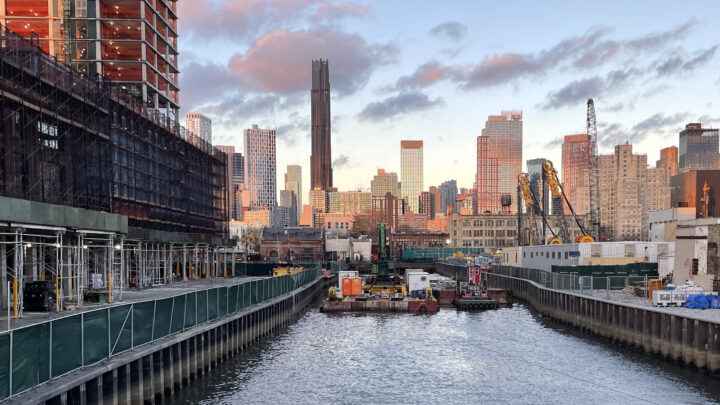
Illustration by David Peter Kerr for the Urban Matters Journal.
———————————————————————————————
Bruhn, J. & Schirrmacher, B. 2022. Intermedial studies: An introduction to meaning across media, United Kingdom: Taylor & Francis.
Caldeira, T. P. 2000. City of walls: crime, segregation, and citizenship in São Paulo, United Kingdom: University of California Press.
Caldeira, T. P. 2012. Imprinting and moving around: New visibilities and configurations of public space in São Paulo. Public Culture, 24 (2(67)), 385-419.
Caldeira, T. P. 2014. Gender is Still the Battleground: youth, cultural production and the remaking of public space in São Paulo. In Parnell S and Oldfield S (eds.) The Routledge Handbook on Cities of the Global South. London: Routledge, 413-428.
Carpio, G., Irazábal, C. & Pulido, L. 2011. Right to the Suburb? Rethinking Lefebvre and Immigrant Activism. Journal of Urban Affairs, 33(2), 185-208.
Deuze, M. 2011. Media life. Media, Culture & Society, 33(1), 137-148.
Deuze, M. 2012. Media life, United Kingdom: Polity Press
Elleström, L. 2010. The modalities of media: A model for understanding intermedial relations. In Elleström, L. (ed.) Media borders, multimodality and intermediality. United Kingdom: Palgrave Macmillan UK.
Elleström, L. 2021. The modalities of media II: An expanded model for understanding intermedial relations. In Elleström, L. (ed.) Beyond media borders, volume 1: Intermedial relations among multimodal media, Germany: Springer International Publishing. 3-91.
Fraser, N. 1990. Rethinking the public sphere: A contribution to actually existing democracy. Social Text 25(26):56–79
Georgiou, M. 2013. Media and the city: Cosmopolitanism and difference. Polity.
Harvey, D. 2012. Rebel Cities: From the Right to the City to the Urban Revolution. Netherlands: Verso.
Harvey, D. 2013. The right to the city. In Shaw J. and Štiks I. (eds.) Citizenship Rights. London: Routledge.
Johnson, G. T. 2013. Spaces of conflict, sounds of solidarity: Music, race, and spatial entitlement in Los Angeles, Berkley, Los Angeles and London: University of California Press.
Lefebvre, H. 1991. The Production of Space. Blackwell.
Lefebvre, H. 1996. Writings on Cities. Blackwell.
Lefebvre, H. 2009. State, Space, World: Selected Essays. University of Minnesota Press.
McLuhan, M. 1967. Understanding media: The extensions of man. Austria: The Sphere Books
McQuire, S. 2006. The politics of public space in the media city. First Monday. doi: 10.5210/fm.v0i0.1544.
McQuire, S. 2008. The Media City: Media, Architecture and Urban Space, United Kingdom: SAGE Publications.
Mitchell, D. 1995. The End of Public Space? People’s Park, Definitions of the Public, and Democracy. Annals of the Association of American Geographers, 85(1), 108-133.
Mitchell, W. J. 2005. There are no visual media. Journal of visual culture, 4(2), 257-266.
Schifani, A.M. 2021. Urban ecology and intervention in the 21st century Americas: verticality, catastrophe, and the mediated city. Routledge.
Tufekci, Z. 2017. Twitter and tear gas: The power and fragility of networked protest, New Haven and London: Yale University Press.
Zukin, S. 2009. Naked city: The death and life of authentic urban places. Oxford University Press.