Inaudible Cities. Traversing Infra-Ordinary Soundscapes
Inaudible Cities is an ongoing exploration of suburban soundscapes that seeks to draw attention to the urban periphery as a site of vital importance to the city at large.
Inspired by this polyphonic technique of indirect storytelling, Inaudible Cities explores the suburbs of Stockholm, where I live, through a series of short sonic portraits taken on uneventful Friday afternoons. The project did not originate from a single point of departure but emerged from several converging moments. One such moment was a statement by U.S. President Donald Trump, who, during a rally on the evening of February 18, 2017, made a vague and inaccurate reference to an imagined incident in Sweden: “You look at what’s happening last night in Sweden. Sweden, who would believe this? Sweden.”[1] In response, Swedes took to social media to post messages about the ordinary events that occupied them that evening, sharing photographs from uneventful places where they happened to be.
More fundamentally, the project draws inspiration from the iconic novel Invisible Cities by the Italian-Cuban writer and Oulipo member Italo Calvino.[2] In the book, Calvino introduces Marco Polo as an urban storyteller who recounts a series of fantastical cities to the Mongol emperor Kublai Khan, who, wearied by empire, longs for new stories. Each city Polo describes is a metaphor, reflecting different facets of human experience—memory, desire, language, imagination. Rather than following a traditional narrative arc, the book unfolds as a philosophical meditation on the nature of cities and how we perceive them. In a key moment, Kublai Khan asks Polo why he never speaks of his own city, Venice. Polo responds: “Every time I describe a city, I am saying something about Venice.”
Inspired by this polyphonic technique of indirect storytelling, Inaudible Cities explores the suburbs of Stockholm, where I live, through a series of short sonic portraits. These are magic-realist stories that reveal overlooked aspects of city life, told from the perspective of what we habitually call the margins—the suburbs, the periphery. Through soundwalking excursions to the city’s edges, the project asks: what stories about the city emerge when we turn our attention away from the spectacular, the sensational, the “extra-ordinary,” and instead focus—especially sonically—on the “infra-ordinary,” to borrow a term from Georges Perec, another member of Oulipo?[3]
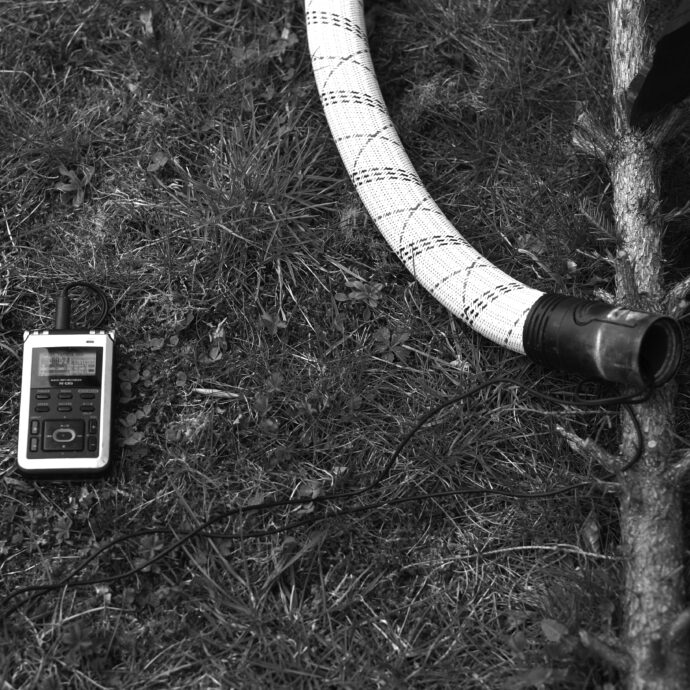
Echoing Oulipo’s fascination with constrained writing techniques, my exploration of Stockholm’s suburbs follows a self-imposed set of instructions. As an overarching structural device, I use the Stockholm subway map and visit the terminus of each line—thirteen in total. Upon arrival, I spend exactly 130 minutes wandering the vicinity of each station, guided by intuitive movement and an attuned sense of hearing, supported by creative field-recording and mapping tools. These include contact microphones, hydrophones, electromagnetic field detectors, and binaural microphones. In addition to sound, I document my walks through photography and geo-positional data collected via a GPS watch. After each walk, I download and visualize the GPS data into a minimalist trace—an ephemeral cartographic imprint that captures both the spatial and temporal contours of my journey. This trace also serves as the symbolic border of a fictional, transient city, shaped by my fleeting presence in the suburb.[4]
On the return subway ride, I jot down initial thoughts and reflections from the site. These semi-automatic notes become the foundation for a poetic textual layer—a literary impression of the place. Back home or in my studio, I continue developing this short narrative by researching the district’s history. The intuitive, sensory account of each walk—ideally condensed into thirteen sentences—is thus complemented by another form of improvisational wandering, this time through fragmented and often globally dispersed digital archives.
The final project is planned to comprise thirteen chapters, each named after the district visited—or creatively adapted from its name.
The first chapter is presented below:
- Lady’s Meadow
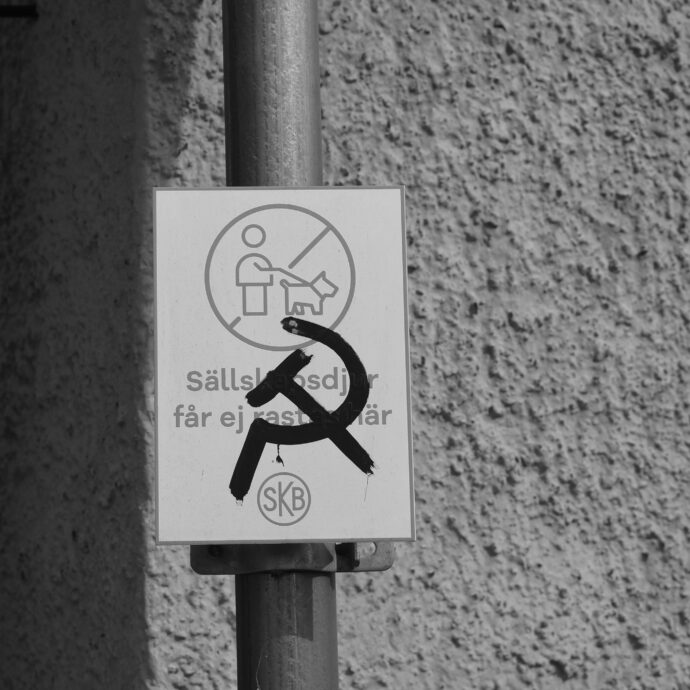
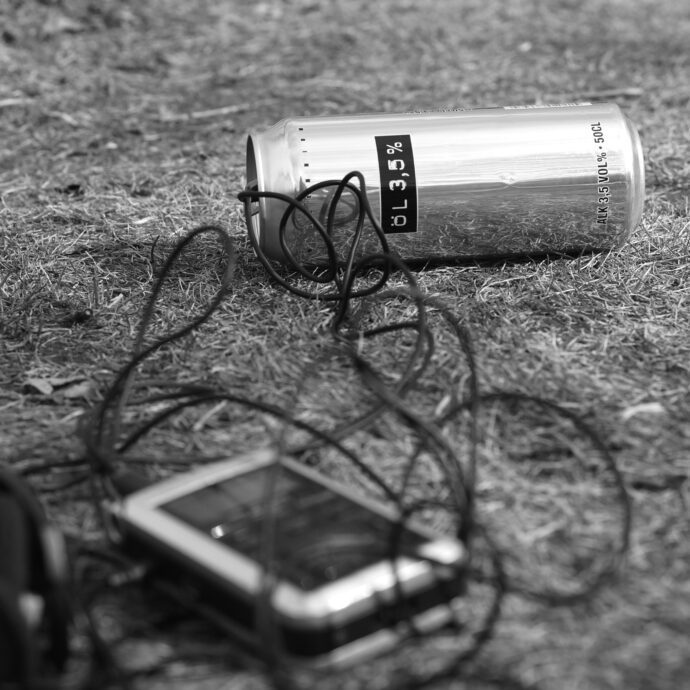
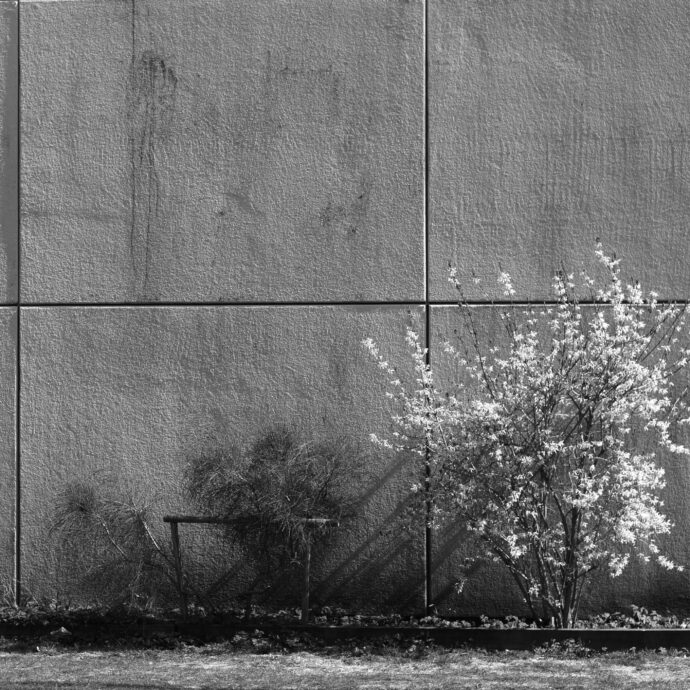
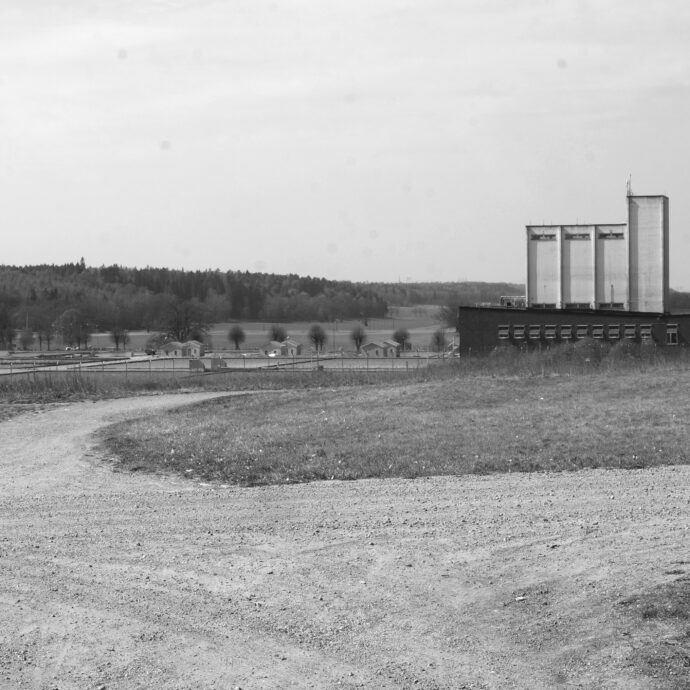
Each year there comes a day on which Lady’s Meadow changes its owners. No one knows who initiated this ritual, but Meadowers seem to have accepted and adhered to it unanimously. This power shift gets reflected most vividly in the way the city begins to sound. Human voices withdraw, leaving room for the diversity of avian dialects. The pace of human footsteps subsides, making way to the rustling of skinny, almost phantom-like hindlimbs, digits, and claws. Echoes of ideological conflicts wear off. On that day they can be witnessed only through silent marks and symbols, nastily imposed on picnic tables, traffic signs, and walls. Out of boredom and ignorance, rather than real intention, one would assume. Retired from their power cravings, in a state of temporal suspension of their appetite for control, humans of not that many kinds sip their tranquilizing liquids, chew their silencing legumin, and observe. This temporary state in which Meadowers deprive themselves of control is, however, rather deceptive. No matter how much space the interests of avifauna are given to sprout, it happens strictly in accordance with human intentions. Regardless of the extent to which the kinetic energy of Meadowers ceases, it does not disappear completely. Transferred into mechanical rhythms of water fountains, meditative deliberations of ventilation shafts, and the hiss of air conditioning systems, human will (willingly or not) retains and keeps performing its structuring potency. For a careful observer not acquainted with this local ritual, the one-day dominance of birds over Lady’s Meadow is in fact a continued celebration of people’s capacity to delegate power.


[1] Source: https://www.bbc.com/news/world-us-canada-39020962, accessed, 29.05.2025
[2] Oulipo, short for Ouvroir de Littérature Potentielle (Workshop for Potential Literature), is a literary movement that originated in France in 1960, founded by Raymond Queneau and François Le Lionnais. The group is known for its unconventional approach to creativity, advocating that restrictions can enhance artistic expression rather than stifle it. Source: https://www.ebsco.com/research-starters/literature-and-writing/oulipo-group-authors, accessed: 28.05.2025
[3] Perec, G., 1989. L’Infra-ordinaire. Paris: Éditions du Seuil.
Similarly, in An Attempt at Exhausting a Place in Paris. Perec spends three days sitting in Place Saint-Sulpice, recording everything he notices: buses, pigeons, snippets of conversation. His goal is not to write about what makes the square famous, but to catalog its everyday rhythms and ephemeral details.
Perec, G., 1975. Tentative d’épuisement d’un lieu parisien. Cause commune, (1), pp.69–85. Paris
[4] More detailed description and presentation of the project can be found in
Biserna, E. (ed.) (2022) Going Out – Walking, Listening, Soundmaking, Press.umland / Q-O2, Brussels
References
The project premiered in 2018 as part of Sound Diaries initiative curated by Patrick Farmer at Oxford Brookes University.